The Moral Injury Lab:
Projects and Publications
Current projects
Moral injury research at a crossroads: assumptions, limitations, and the promise of relational reorientation
C Acampora, DM Munch-Jurisic, S Denne, J Smith Frontiers in Psychiatry 17, 1791225
While researchers have repeatedly acknowledged limitations with prevailing definitions of moral injury and offered alternatives, the underlying core conceptual model—which characterizes moral injury as intrapsychic damage to belief structures—has remained largely unchanged. We argue that this is a significant impediment to research progress. Through conceptual analysis of the most influential accounts of how moral injuries occur and advance, we identify numerous implicit and untested assumptions about morality that impede empirical research. We propose an alternative conception of moral injury as a form of relational disruption rather than belief violation. We argue that this model is also more compatible with leading treatments that target relational repair, reconditioning, and rehabilitation. Open access to the full paper is available here.
Moral From Outlaw Emotions to Moral Injury: Rethinking the Affective Disruptions of Norms
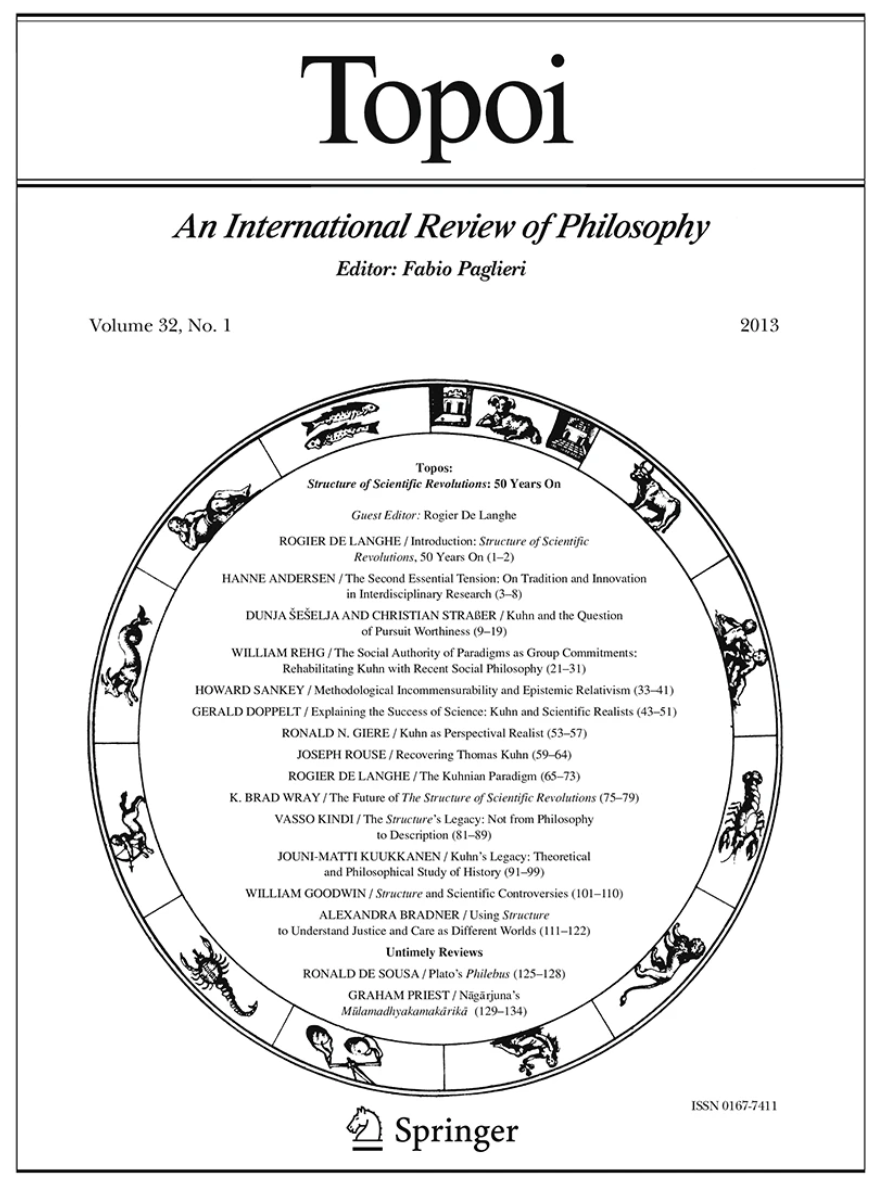
Munch-Jurisic, D.M., CD Acampora Topoi, DOI 10.1007/s11245-026-10442-1
Drawing on contemporary philosophy of emotion, this paper examines vague or ineffable emotions or feelings that resist easy classification, signal estrangement from dominant norms, and carry potential for critical reflection. Extending Allison Jaggar’s concept of outlaw emotions, we examine case studies of military service members experiencing persistent estrangement and unease during and after military missions, situating these cases within broader discussions of moral injury and distress. These studies also have implications for how outlaw emotions are understood as affective disruptions that open space for reflection without a predetermined outcome and which are not reducible to combinations of discrete basic emotions. Open access to the full paper is available here.
Where Do Moral Injuries Come From? A Relational Conception of Moral Practice and Experience
CD Acampora, DM Munch-Jurisic, S Denne, J and Smith
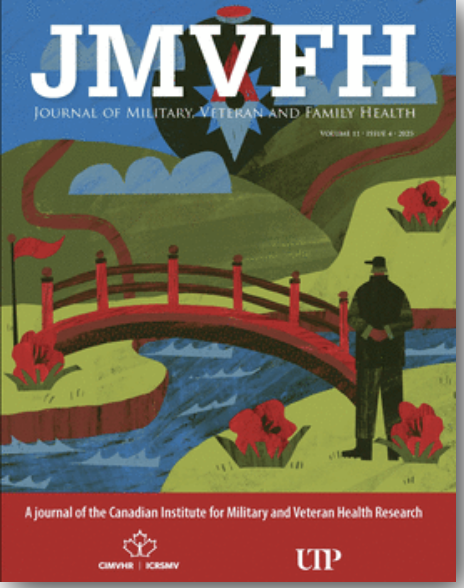
Journal of Military, Veteran and Family Health 11 (4), 141-146
Engaging with the most current literature on Veteran and family experiences with moral injury, we make the case that the conventional way of conceptualizing moral injury does not include an adequate understanding of ordinary moral experience. For evidence, we focus on conceptions of “moral practices” drawn from moral philosophy and applied to specific cases. Of special interest is our novel account of how moral injuries could be understood as transmissible to Veterans’ families. Open access available here.
Special Issue on Ditte Marie Munch-Jurisic’s Book Perpetrator Disgust
Philosophical Psychology published an engaging symposium on Dr. Munch-Jurisic’s 2022 work, Perpetrator Disgust: The Moral Limits of Gut Feelings. Included are three commentaries on the book and a response from Dr. Munch-Jurisic. More information on the book can be found at Oxford University Press’s website!

Critique of the Standard Model of Moral Injury
CD Acampora, DM Munch-Jurisic, A Culbreth, S Denne, J and Smith, New Ideas in Psychology 75, 101-107
In this article, we formalize and assess the dominant conceptualization of moral injury in clinical research. Clinical research tends to situate moral injuries as an intrapsychic phenomenon, as a traumatic injury to belief systems. In this model, moral injuries are caused by events that run contrary to our moral beliefs or conflict with personal moral codes. As an alternative, we conceive of moral injuries as occurring in the world, in our moral relationships with others, and not primarily in our heads. Open access available here.
Are You Gaslighting me? The Role of Affective Habits in Epistemic Friction
Dr. Munch-Jurisic analyzes gaslighting and its role in forming emotional habits. The experience gaslighting often produces the expectation of further emotional manipulation. This expectation presents a unique and underexplored epistemic obstacle for victims of gaslighting.
Indeterminacy in Emotion Perception: Disorientation as the Norm
Cases of moral injury demonstrate that our emotions often are not transparent to us. Dr. Munch-Jurisic uses this insight in a recent publication to argue against the standard assumption in contemporary psychology and philosophy of emotion that we typically know what we feel.

Past projects
The Experience of War: Moral Transformation, Injury, and Repair
NEH Grant (2016-2018)
In 2016, Dr. Acampora was awarded a grant from the National Endowment for the Humanities (NEH) as part of the “Dialogues on the Experience of War” initiative.
The project included a series of reading groups on moral experiences in war, staged throughout New York City and led by an expert panel of facilitators. It also included public events and a culminating conference. As part of the project, Acampora also taught an interdisciplinary honors seminar. Subsequently, she supported related activities, also funded by the NEH, at Emory University.
Here are links to some of the events from “The Experience of War: Moral Transformation, Injury, and Repair”:
Moral Transformation in War: https://livestream.com/roosevelthouse/moral-transformation-war
Morality in Relief: https://livestream.com/roosevelthouse/crossing-the-divide
The Good Life After War: https://livestream.com/roosevelthouse/nancy-sherman-afterwar
A Warrior Ethos: https://livestream.com/roosevelthouse/a-warrior-ethos
Reflections on Moral Injury, Transformation, and Repair: https://www.youtube.com/watch?v=F5EevtOgyRk


Dirty Work
Dr. Munch-Jurisic’s review of Dirty Work by Eyal Press, with reflections on the concept and its intersections with moral injury. Published in the Danish Newspaper, Dagbladet Information.
